Drapery Fabric Basics: Weight, Light Control, and Fade
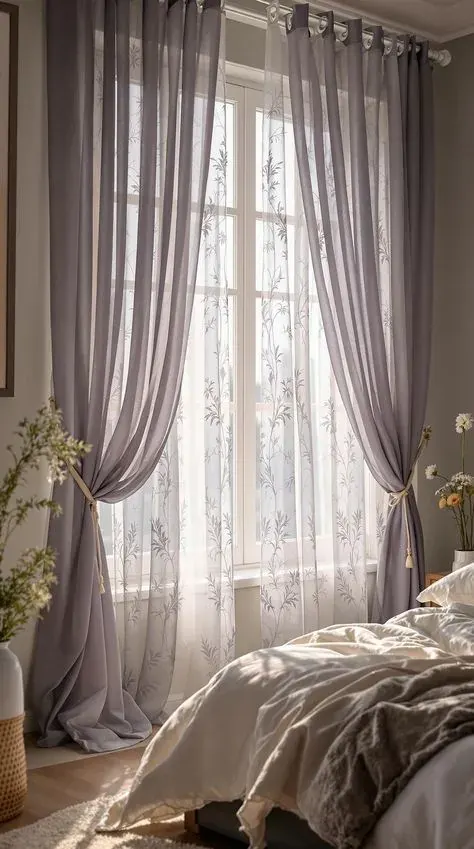
A fabric swatch never tells the whole story. How a material drapes and holds its color only becomes obvious once it is sewn and hanging on a real window, which is exactly why so many Lebanon homeowners end up surprised by a choice that looked perfect on a small square of cloth.
Fabric Weight and How Drapery Falls
Heavier fabric usually costs more per yard, and it's tempting to assume that means better. It doesn't always. What you're actually paying for with weight is drape and durability. A heavy fabric holds its pleat shape for years and doesn't need re-pressing, while a cheap lightweight poly can look tired within a couple of seasons even if nobody's touched it. If the budget is tight, spending on weight in the main living room and going lighter in a guest bedroom is a reasonable way to split the difference.
Where Lebanon homeowners get surprised is hardware cost. A heavy interlined panel on a wide window needs a rod built to carry that load, and an underrated rod is the single most common reason a beautiful fabric ends up sagging in the middle within a year. That's not a fabric problem, it's a mismatch between weight and support.
Lightweight fabric isn't automatically the cheap option either. Sheers and voiles often need more fullness to look right, which means more yardage, so the fabric itself can end up costing close to what a mid-weight solid would.
Light Control and Lining Options
Think about lining room by room instead of house-wide. A media room or bedroom usually wants blackout, full stop, because ambient light from a streetlight or a neighbor's porch light becomes obvious the moment the tv is off or you're trying to sleep past sunrise. A home office wants something in between, enough control to kill glare on a monitor without making the room feel dim all day.
A formal living room, especially one that's mostly for entertaining rather than daily use, can often skip heavy lining altogether and use a light interlining instead, just enough to add body to the fabric without changing how much light comes through. That keeps the room bright and layered rather than closed off.
In Lebanon homes with big west-facing windows, we'll sometimes recommend a sheer as the inner layer and a lined drapery as the outer layer on the same rod. That combination lets you dial in privacy and glare during the day with the sheer, and light control at night with the heavier panel.
Pattern and Texture
Ask what the pattern repeat is in inches before ordering, both vertically and horizontally if it's a two-directional print. That number determines how much extra fabric the job needs and whether the pattern will center itself nicely on the window or land awkwardly off to one side.
Ask to see the fabric in a hank, not a flat swatch, if texture is a big part of the decision. Texture reads completely differently in folds than it does lying flat, and a swatch card genuinely cannot show you how a slub or a weave pattern is going to catch light once it's pleated.
And ask whether the fabric is directional, meaning it has to be cut and sewn with the pattern running one specific way. That affects how much fabric gets used and, on a big Lebanon window needing multiple widths, whether there's enough yardage left over if a cut goes wrong the first time.
Color and Sun Exposure
People assume a UV-resistant fiber or coating means the fabric won't fade, and that's not quite right. What it actually does is slow the rate of change, so a fabric that might show visible fading in a couple of years in a hot, sun-heavy window might take five or six years to show the same change with the right fiber and lining. It's a real difference, but it's a delay, not a stop.
Silk is the fastest fading natural fiber by a wide margin, and we're cautious about recommending it for any window with direct afternoon sun regardless of lining. Solution-dyed acrylics and many polyester blends hold color much longer because the color is built into the fiber itself rather than sitting on the surface, but they don't have the same hand feel as natural fiber, which is a real tradeoff some people don't love.
If a Lebanon homeowner is set on a natural fiber for a sun-heavy window, heavy lining and occasionally closing the panels during peak sun hours are the two things that actually help slow the damage.
Fullness and the Hardware Behind It
Fullness is the ratio of fabric width to rod width, and it's the biggest reason two panels made from the same fabric can look completely different once hung. A pleated panel at standard fullness, roughly two to two and a half times the rod width, falls in defined, even folds. Cut that ratio down to save fabric and the panel looks flat and skimpy no matter how nice the fabric is.
Heading style changes how much fullness you actually need. A grommet panel typically wants less fullness than a pinch pleat to look right, because the grommets themselves create even waves. A ripplefold panel, riding on a track with evenly spaced carriers, often needs the least fullness of all because the wave spacing does most of the visual work.
None of that matters if the hardware underneath can't carry the load. A wide Lebanon window with a heavy, fully lined panel needs a rod rated for that weight, ideally with center support if the span runs past six feet, or the rod will bow and the panels won't glide evenly.
If you are weighing fabric and lining choices against a budget, bring the numbers and the swatches together in the room where the drapery will hang. Scheduling a free in-home measure is a low-pressure way to see what a given fabric actually looks like installed before committing to anything.
Frequently Asked Questions
What is the difference between blackout lining and regular lining?
Regular lining, usually a cotton sateen, adds body and cuts down glare without blocking much light. Blackout lining has a foam-coated or tightly woven layer bonded to it that blocks nearly all direct light through the fabric itself, though some light still leaks around the edges and top of the panel since drapery is not a sealed system the way a shade in a track is.
Why did my curtain color look different once it was installed?
Almost always it is the lighting. Showroom fluorescent lighting and a home's actual daylight render color very differently, and a swatch that looked warm and creamy in the store can look cooler or flatter once it is hanging in a room with different light exposure. Testing a sample against the real window at different times of day avoids most of this surprise.
Is a more expensive fabric always the better choice?
Not automatically. Price often reflects fiber content and how the fabric was dyed, both of which affect drape and how long color holds, but a well-chosen mid-range fabric at the right fullness and with good lining can outperform an expensive fabric that is skimped on those details. Weight and construction usually matter more than the price tag alone.
 Covering a Sliding Door Without Getting in the Way of the Door
 Window Treatments for Tall and Oversized Windows in Lebanon
 What Property Managers in Lebanon Should Know Before Ordering Blinds