Covering a Sliding Door Without Getting in the Way of the Door
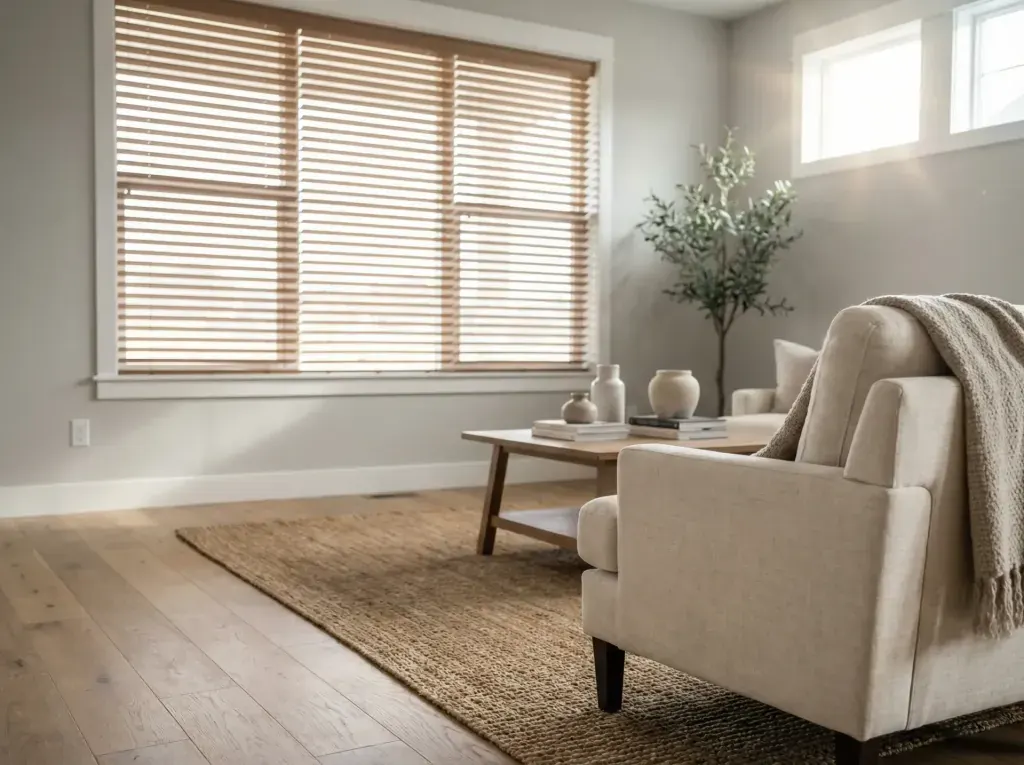
Kids, pets, and grocery bags all pass through a sliding glass door more times a day than any other opening in the house, which makes it one of the harder spots to get a window treatment right.
Why a Standard Window Treatment Doesn't Work on a Slider
A sliding glass door isn't just a wide window. It's a moving wall, and most standard window treatments are built for openings that stay put. Mini blinds and standard cellular shades are typically made up to about 72 to 96 inches wide in one piece, and a lot of sliders run 6 to 9 feet across, sometimes more on a newer great room addition. Order the wrong product and you'll either be short on width or stuck with a shade that's too heavy for its own lift mechanism.
There's also the fact that someone has to keep walking through it. Whatever covers a slider needs to get fully out of the way, not just raised a little, every time the door opens. A treatment that half-blocks the doorway when it's open defeats the purpose of having a door there in the first place.
That combination, width plus daily foot traffic, rules out a few options that work fine on a regular window and points Lebanon homeowners toward a smaller list of products built specifically for this job.
Keeping Foot Traffic and Pets from Wrecking the Hardware
Durability affects total cost over time, not just the sticker price on day one. A cheaper fabric treatment on a high-traffic slider with kids or a big dog in the house often needs replacing sooner than a slightly pricier vinyl or motorized option would, which changes the real cost comparison once you look past the first year.
Vinyl vertical blinds tend to be both the cheaper option and one of the more durable ones for this particular door, which is a rare combination in this category and part of why they remain such a common choice.
If a household has pets that like to push through whatever's covering the bottom of the door, it's worth factoring a bit more into the budget for a sturdier product up front rather than paying for a full replacement in a year or two.
How the Main Slider Options Compare
Picking a product built for width and stacking is the fix for a Lebanon slider. Vertical blinds have been the standard answer for decades because the vanes stack cleanly to one side and the design scales to almost any width just by adding more vanes.
Panel track blinds are worth a look if the vertical blind look feels dated for the room. Wide panels do the same stacking job with fewer visible seams, at a higher price point than a comparable vertical blind.
Cellular and roller shades are the wrong first instinct for a full-width slider covering unless they're being motorized or sized to just the fixed glass section. A manual cellular shade spanning 8 feet is heavy, and pulling it up and down by cord gets old fast, along with tending to lift unevenly over time as the lift cords stretch at slightly different rates.
Mounting and Sizing Around a Door That Still Has to Open
Mounting height and clearance matter more in a busy Lebanon household than the brochure measurements suggest. The stack, whether vanes or panels, needs to clear the doorway fully when the door is open, and it needs to sit high enough and far enough to one side that a kid running through at full speed doesn't clip it.
Outside mount is standard on sliders since the door frame rarely has the depth for an inside mount, which works in your favor here too, since outside-mounted hardware sits further from the glass and slightly out of the path of daily bumps.
Door hardware needs clearance from the mounting brackets so the treatment doesn't become one more thing that has to be worked around every time someone actually uses the door. That includes any screen door track sitting outside the glass.
What Sliding Door Coverings Cost
Design upgrades on a slider treatment, wider panel track instead of narrow vertical vanes, or motorization for a clean uninterrupted look, cost more than the baseline option, and it's worth knowing that before falling in love with a specific look.
As a general national range, vertical blinds for a standard slider commonly run $150 to $400, while panel track systems for the same opening run closer to $300 to $700. A motorized shade spanning a wide slider in one continuous piece often lands between $500 and $1,200 depending on width and fabric.
None of that is a quote for a specific door in Lebanon, just a general starting point. A free in-home measure will show what the design you actually want costs once your exact width and fabric choice are factored in.
The general ranges here are a starting point, not a final number, since your door's exact width and the product category you choose both move the total. A free in-home measure will turn that range into an actual price for your Lebanon home. Call (317) 999-5154 whenever you're ready to schedule one.
Frequently Asked Questions
Will vertical blinds fit a really wide sliding door?
Vertical blinds handle width well since adding more vanes is straightforward, unlike a single continuous shade that has to be engineered as one wide piece. They're a common choice for wider sliders and multi-panel doors for exactly that reason.
Can I put regular cellular shades over my sliding door?
You can, though it usually works better sized to just the fixed glass panel rather than the full moving width, unless the shade is motorized. A manual lift across 8 feet or more of fabric gets heavy and tends to raise unevenly over time.
What's the difference between vertical blinds and panel track blinds?
Vertical blinds use narrow rotating vanes, usually 3 to 5 inches wide, that stack to one side. Panel track blinds use fewer, wider fabric panels on a similar stacking track. Panel track generally gives a cleaner, more modern look and typically costs more for the same opening.
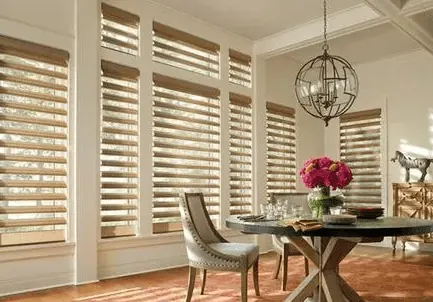 Window Treatments for Tall and Oversized Windows in Lebanon
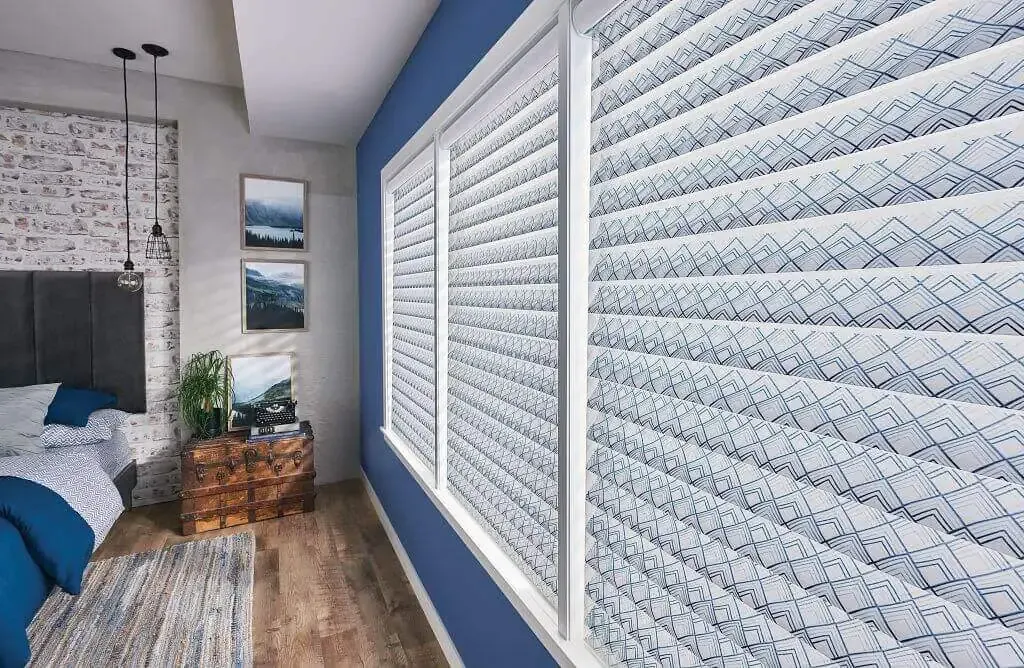 Where Roller Shades Belong in a Lebanon House, Room by Room
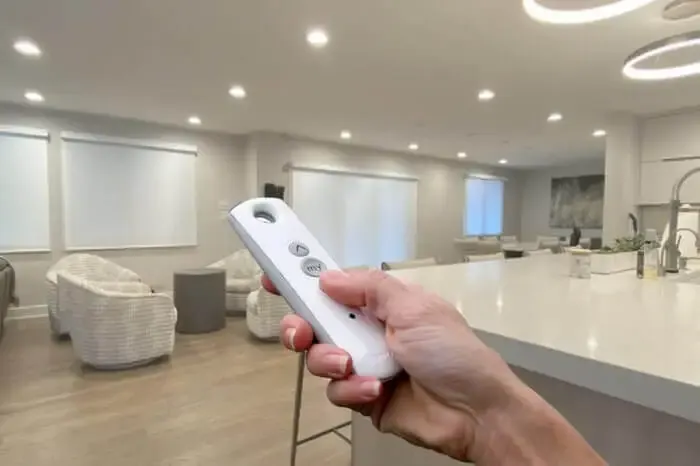 What Actually Goes Wrong With Motorized Shades in Lebanon