What Property Managers in Lebanon Should Know Before Ordering Blinds

A spreadsheet tells a more honest story about window coverings than a showroom does once turnover and repair costs get factored in over several years.
Why Rental-Grade Window Coverings Aren't the Same Product as Retail
A property manager in Lebanon ordering blinds for a dozen units is solving a different problem than a homeowner picking something for their own living room. The homeowner wants a look that lasts for years and is willing to pay for a nicer material. A landlord wants something that survives multiple tenants, is easy to replace piece by piece, and doesn't cost so much per unit that a single move-out wipes out the margin on that apartment for the year.
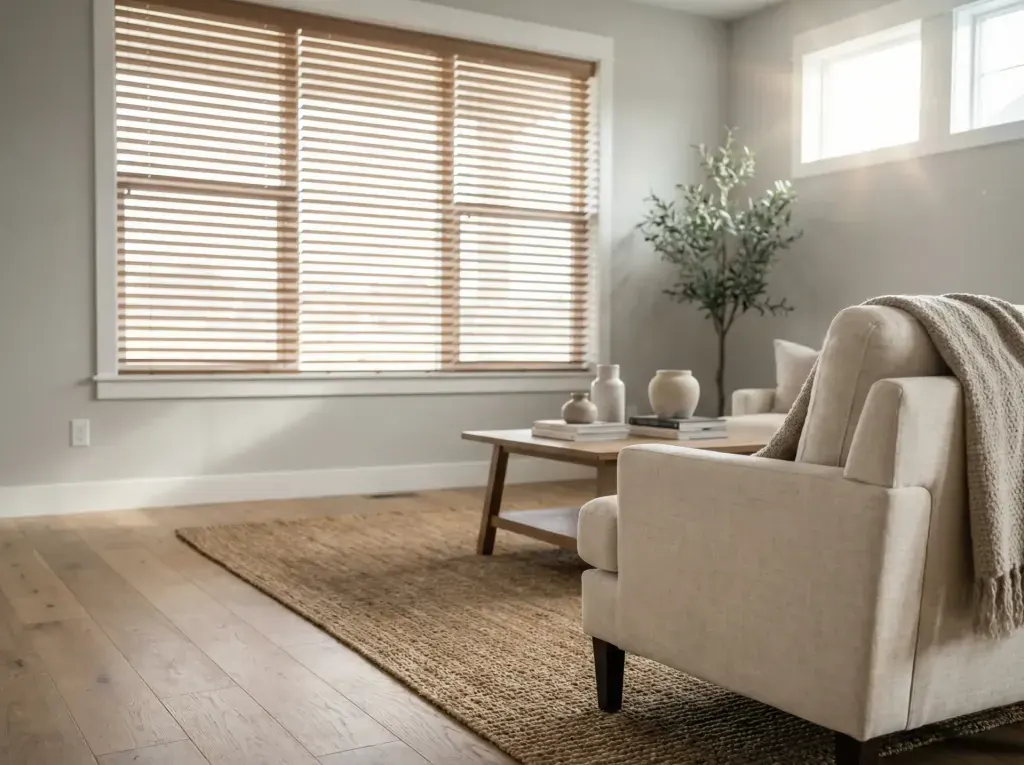
That's why 2-inch vinyl or faux wood blinds show up in so many rental units. They're inexpensive at volume, they wipe clean, and they hold up to humidity in a bathroom or kitchen in a way real wood never will. Real wood blinds look better, and plenty of owners want them in a nicer single-family rental with a longer-term tenant, but in a true churn-and-burn unit they're usually the wrong call, since a dent or a water spot on real wood costs a lot more to fix than the same damage on vinyl.
Cordless Options and Why They Make Sense in Rental Units
Across a large property, cordless blinds cut down on a specific category of service call almost entirely, which matters more at scale than it does for a single house. A property with a hundred units fielding even a handful of cord-related repairs a month adds up to real technician hours over a year, and that's before counting the vacancy days a make-ready delay can add during peak leasing season.
Cordless also tends to be the easier sell to a design review or an HOA board, since it reads as a cleaner, more current look in a leasing office or model unit walkthrough, on top of being the more practical choice for day-to-day operation.
Ordering and Installing Across Multiple Units or Buildings
Keep the spec boring on purpose. Two or three sizes, one or two colors, the same product line across the whole property. It makes reordering fast and lets a maintenance closet hold real spares instead of nothing, which is the difference between a same-week fix and a two-week special order every time something breaks.
Don't skip the field check on an older building just because the floor plans look consistent on paper. Actual openings drift over the years, sometimes enough that a stock-sized blind leaves a visible gap on one side, and that's an easy problem to avoid by checking a sample of Lebanon units before the full order goes in. It takes an afternoon. Skipping it can cost weeks of back-and-forth on a reorder later.
Weighing Upfront Cost Against How Often You'll Replace It
The unit that needs replacing every year isn't cheap just because the sticker price was low. National pricing for basic vinyl mini blinds sits well below custom wood or fabric treatments, but if a bargain product needs replacing at every single turnover while a slightly better one lasts three or four tenants, the cheaper option isn't actually cheaper.
Track what gets replaced and why across a Lebanon property for a year or two, and the pattern usually points to one or two specific product choices worth upgrading, rather than an across-the-board push toward either the cheapest or the nicest option available.
Running the actual numbers on a few product tiers against your specific units, starting with a free in-home measure, makes the cost comparison a lot more concrete than guessing from a spec sheet.
Durability: What Actually Survives Between Tenants
Track what actually breaks across a property for a year and a pattern shows up fast: vertical blinds on patio doors, cheap paper-composite blinds in bathrooms, and bent slats near the bottom rail where furniture gets moved in and out. Those categories account for most reorders in a lot of buildings, and each one has a known fix.
Switching patio doors to a cordless cellular shade or panel track at the next turnover, specifying true vinyl or PVC composite for bathroom windows, and choosing a slightly heavier-gauge slat for ground-floor units all cost a bit more per window up front. Compared against the labor cost of fielding the same repair call every year or two, the math usually favors spending more once.
Frequently Asked Questions
How often do window coverings need to be replaced in a rental?
It depends heavily on the product. Cheap composite blinds in bathrooms and vertical blinds on patio doors tend to fail fastest, sometimes within a year or two, while solid vinyl or faux wood blinds elsewhere in a unit can survive several tenants with basic cleaning between leases. Tracking what actually gets replaced on your own property over a year or two is the most reliable way to know.
Does manufacturer warranty cover replacement between tenants?
Usually not in a way landlords can rely on. Most warranties are written for an original purchaser or household, not a unit that changes hands with every new lease. It's more realistic to budget a small annual line for wear and turnover damage than to expect warranty coverage to handle ongoing replacement costs.
What should I specify for bathroom windows in rental units?
Solid vinyl or true PVC composite, not a paper-wrapped composite sold as faux wood. The cheaper paper-based version will bubble and swell from shower steam and humidity within a year or two, while solid vinyl holds its shape through repeated humidity cycles without that problem.
 Covering a Sliding Door Without Getting in the Way of the Door
 Window Treatments for Tall and Oversized Windows in Lebanon
 Drapery Fabric Basics: Weight, Light Control, and Fade