The Inside Mount vs Outside Mount Question, Answered
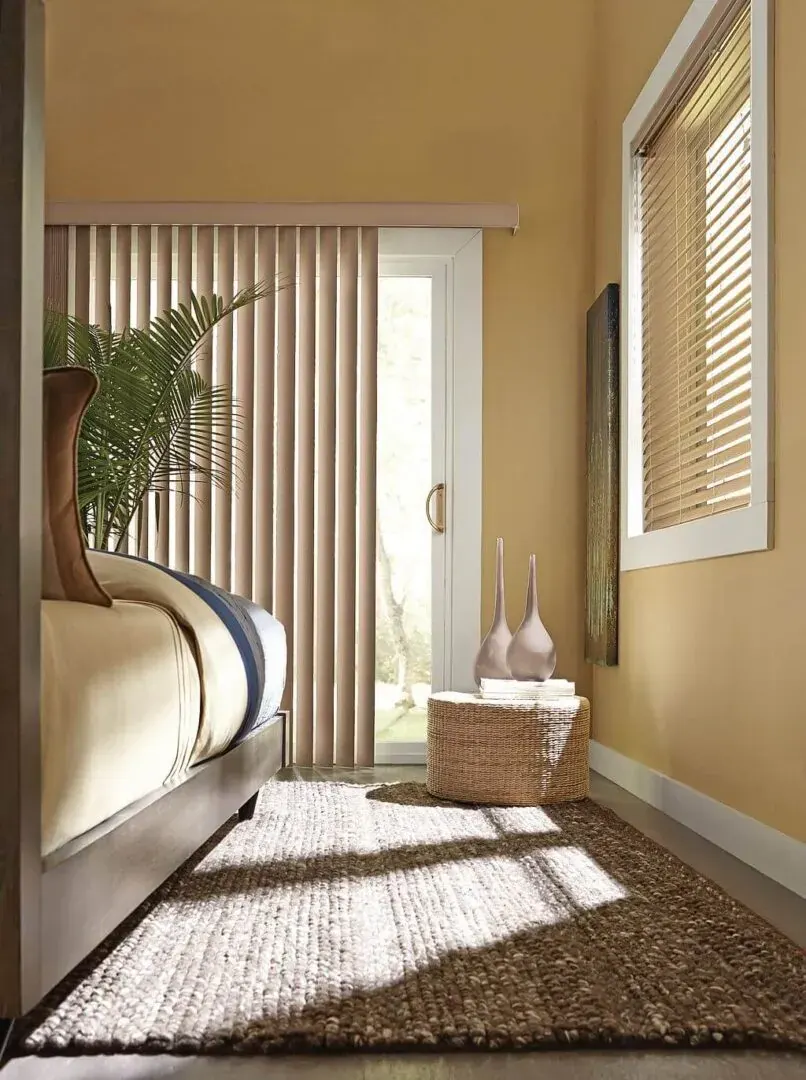
Nobody grows up knowing the difference between inside mount and outside mount, and there's no reason they should. It's a decision that only matters the day you're ordering window coverings, and by then most Lebanon homeowners have already spent more time picking a color than thinking about how the hardware actually attaches.
Inside Mount and Outside Mount, Defined
Inside mount means the blind or shade sits inside the window frame itself, tucked into the opening so the headrail is basically flush with the trim. From across the room it looks built in, like the window was designed around it. Outside mount means the hardware attaches to the wall or trim in front of the opening, covering the frame rather than fitting inside it.
Neither one is the correct choice in some general sense. They're just two different ways of solving the same problem, and which one works on a given window in Lebanon comes down to measurements more than preference. A window with 2.5 inches of clear depth and nothing in the way can usually take either mount. A window with a crank handle intruding into that space or a sill that slopes toward the glass often can't take inside mount at all.
The visual difference matters too. Inside mount shows a bit of the frame around the edges of the shade, which a lot of people like because it reads as more architectural. Outside mount hides the frame entirely and can make a window look larger, since the headrail extends past the actual glass. Once you've seen both on a real house instead of a showroom display, the difference is obvious.
Why Homeowners Choose Outside Mount
Ask yourself first whether the frame even has the depth for inside mount. If it doesn't, or if a crank handle or lock is sitting where the hardware would need to go, the decision's already made for you and outside mount is the answer regardless of preference.
Beyond that forced case, ask how much light control actually matters in that room. A bedroom that needs to go properly dark benefits from outside mount's ability to fully overlap the frame and close the gaps that inside mount leaves open. A home office or a dining room usually doesn't need that same level of light blocking, which is why outside mount shows up more often in bedrooms than anywhere else in a typical Lebanon house.
Last question: is the frame square? Older homes especially can settle unevenly over the decades, and an out-of-square opening is much easier to work around with outside mount, since the header mounts level above the window regardless of what the frame underneath is doing.
Depth, Obstructions, and Other Mounting Realities
The number that actually settles most inside versus outside arguments is depth, not opinion. Faux wood blinds generally need 2 to 2.5 inches of clear space. Cellular shades can sometimes fit into slightly less. Shutters are the pickiest, usually wanting 3 to 3.5 inches because the panel frame itself takes up real room.
Here's where the idea of easy DIY measuring falls apart a little: a tape measure alone won't catch everything. A crank handle sticking into the frame, a sill sloping toward the glass, trim that's been added since the original window went in, all of these can rule out inside mount on a window that measures deep enough at first glance.
None of these problems are rare. They show up often enough that a professional measure exists specifically to catch them before an order goes in, rather than after a custom product arrives and doesn't fit the way it was supposed to.
Mixing Mounts and Getting a Consistent Look Room to Room
It's genuinely common for one Lebanon house to end up with inside mount bedrooms, outside mount bathrooms, and a living room that could have gone either way. That mix isn't a sign of a compromise. It's just what happens when each room's actual needs get taken seriously instead of forcing one mount across the whole house.
The place to watch for consistency is within a room that has more than one window, and across rooms that are visible from each other at the same time. A great room with sightlines into the kitchen and up a staircase benefits from matching colors and headrail styles even where the mount underneath varies slightly.
What you want to avoid is a single wall with mismatched mounts on windows that clearly belong together. If two windows in the same room can't take the same mount for some structural reason, it's worth discussing options that keep the look unified rather than discovering the mismatch after installation.
Inside or outside, the right mount depends on details a photo can't show you. A free in-home measure covers the depth check, the trim question, and the obstruction check in one visit, so you're not making a permanent decision off a guess.
Why Homeowners Choose Inside Mount
The appeal is mostly visual. Inside mount keeps your trim doing what it was built to do, framing the window rather than disappearing behind hardware. On a window with detail worth showing, whether that's original woodwork in an older Lebanon home or nicer trim added during a renovation, inside mount is usually the instinct, and it's usually the right one when the frame allows it.
It also sits closer to the glass, which matters in rooms where anything hanging further out would be in the way. Kitchen windows over a sink are the classic example. A faucet or a window crank can make outside mount hardware awkward or even impossible to clear, and inside mount avoids that problem by staying within the opening itself.
The honest tradeoff is a light gap along the edges, sometimes a half inch or more depending on the product, since the shade has to be built slightly smaller than the frame opening to physically fit inside it. For a home office or a living room that's a non-issue. For a bedroom where you want it fully dark, it's worth seeing that gap in person before you decide.
Frequently Asked Questions
Why does my window have a gap around the blind?
That's almost always an inside mount doing exactly what it's supposed to do. The headrail sits inside the frame rather than covering it, so a strip of frame stays visible on the sides and sometimes the top. It's not a defect, it's just how that mount works.
Is outside mount more expensive?
Not because of the mount itself. Outside mount usually needs a slightly wider blind to get full coverage, so the material cost can run a bit higher, but the difference is usually modest rather than dramatic.
What if my window frame is uneven or out of square?
That's a common reason to go with outside mount. It hangs from a straight header above the frame, so a crooked or out-of-square opening underneath it matters a lot less than it would with a blind trying to fit snugly inside the frame itself.
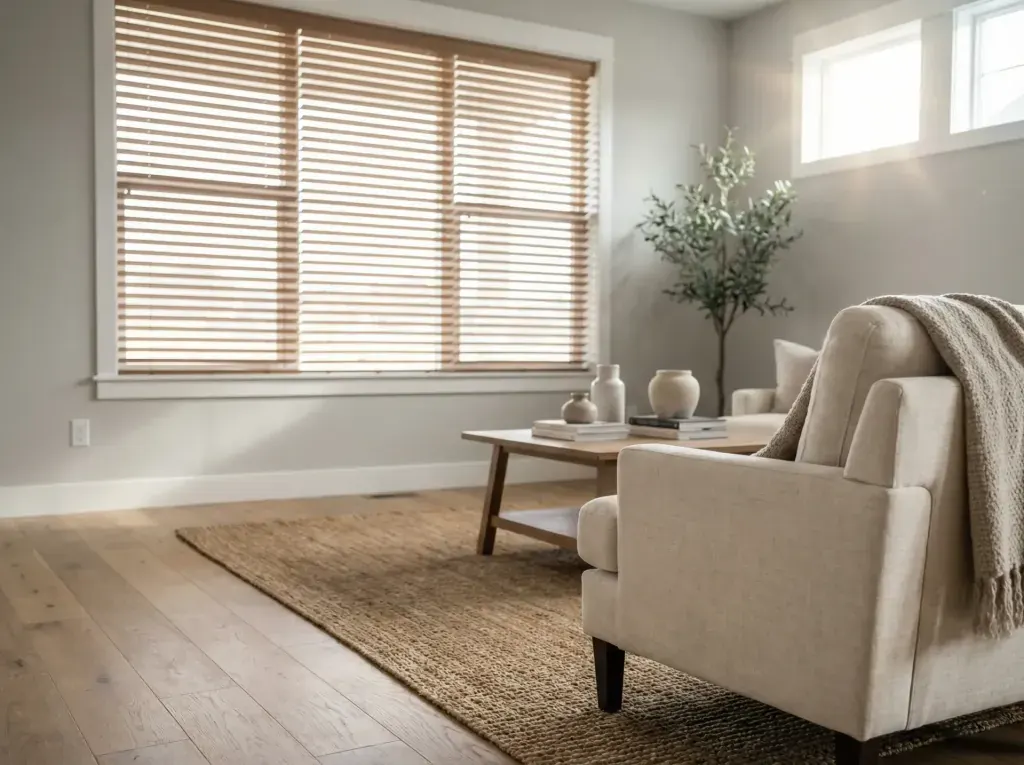 Covering a Sliding Door Without Getting in the Way of the Door
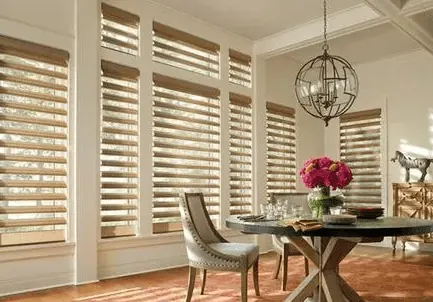 Window Treatments for Tall and Oversized Windows in Lebanon
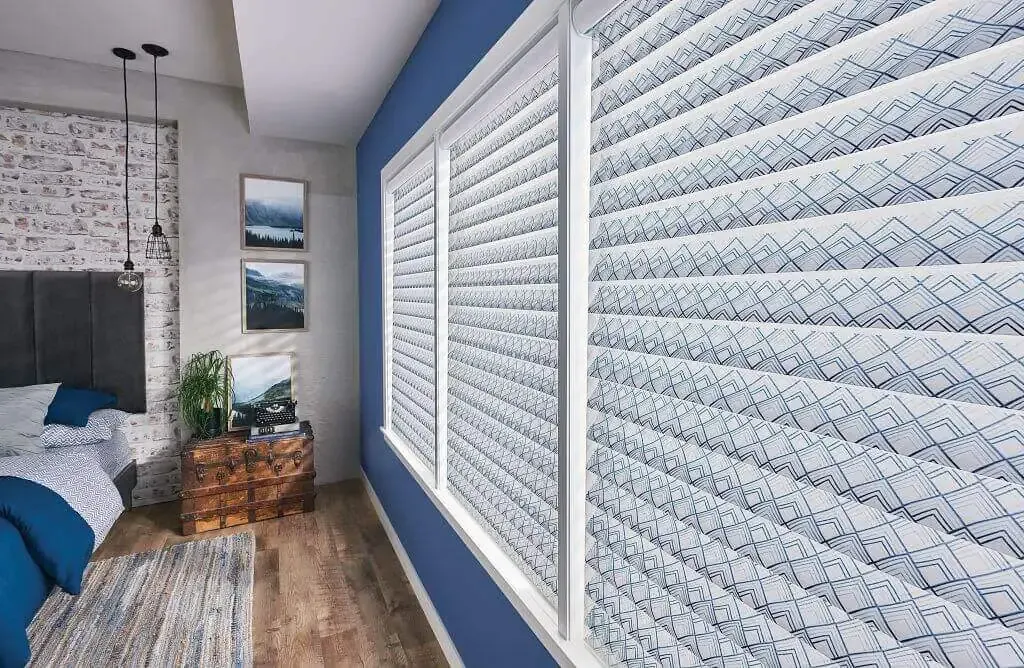 Where Roller Shades Belong in a Lebanon House, Room by Room