The Most Common Layering Mistakes We See on Lebanon Windows
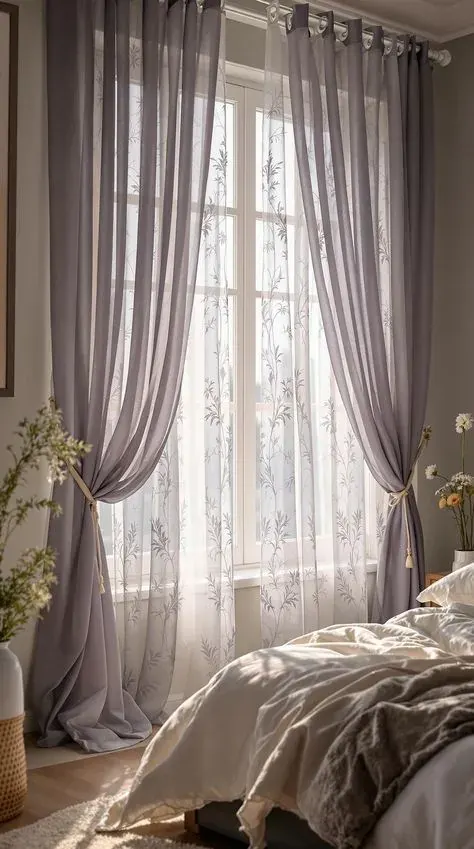
Most of what makes a layered window look off comes down to a handful of repeatable mistakes, not bad taste or bad fabric.
Why Pair a Shade With Drapery Instead of Choosing One
A shade alone handles light and privacy well but can look plain on its own, especially on a bigger window in a Lebanon living room or dining room. Drapery alone looks finished but does a mediocre job controlling light unless it's kept closed most of the time, which defeats the point of having windows in the first place. Pairing them lets each layer do the job it's actually good at: the shade handles daily light control up close to the glass, and the drapery frames the window and adds softness, texture, and a bit of extra insulation when it's drawn.
It's not really an either/or decision most designers or installers would frame that way. A shade behind drapery is closer to how a well-appointed room has been finished for a long time, it's just that shades have gotten a lot more common as the primary daily-use layer instead of a second set of sheers.
Common Mistakes That Make a Layered Window Look Off
In a living room, the most common issue is drapery that's sized for the window rather than the wall, which leaves the panels crowding the glass instead of stacking cleanly to the sides. It looks pinched in a room that otherwise has plenty of wall space to work with.
In a bedroom, the more common problem is length: panels that stop short of the floor read as unfinished, especially next to furniture that sits low, like a bed frame. A rod-to-floor measurement taken before ordering, not estimated, avoids both problems on any window in a Lebanon house, whether it's a living room, a bedroom, or a dining room getting the same treatment.
Getting the measurements right the first time avoids most of the common mistakes, and a free in-home measure is a straightforward way to make sure the rod, the shade, and the drapery all actually line up.
Matching Headrail and Rod Placement So Both Layers Work
Order of installation matters here. The shade's headrail, whether it's inside or outside mounted, needs to be set first, since the drapery rod's projection depends on clearing it. A standard drapery rod might sit 3 inches off the wall, but layered over a shade, that needs to grow to somewhere around 4.5 to 6 inches so the rings and panels don't catch on the shade's headrail every time they move.
Rod height and width are the other two numbers to get right. Mounting 4 to 6 inches above the frame, sometimes closer to the ceiling in a room with standard 8-foot ceilings, and extending the rod 4 to 6 inches past the opening on each side lets the panels stack fully clear of the glass. Skimp on either number and the drapery ends up covering part of the window even when it's supposedly open.
Function Layers: Light Control, Privacy, and Room Darkening Together
A single shade trying to be both the everyday light filter and the nighttime blackout layer is a compromise, not a solution. It's either too heavy for daytime use or not dark enough at night. Splitting those jobs, a lighter shade for daily use, blackout-lined drapery for full darkness, solves both instead of settling for a middle ground that's mediocre at each.
This matters most in bedrooms and any room used for something like a home theater. Everywhere else in a Lebanon house, it's a nice-to-have, not a necessity, and it's fine to say so instead of upselling a combination a room doesn't really need.
Fabric and Color Choices That Keep Layered Rooms From Looking Busy
Fabric choice affects the budget more than most homeowners expect going in. A simple solid shade paired with a mid-range drapery fabric keeps costs reasonable while still giving a Lebanon room the layered look. Reaching for a patterned, heavier, or custom-dyed fabric on both layers at once adds up fast, and it's rarely necessary since one layer carrying the visual interest usually looks better than two competing for attention anyway.
Where it's worth spending more is lining. A quality blackout or thermal lining on the drapery adds real function, extra darkness, a bit of added insulation, for a moderate increase in cost, more value per dollar than upgrading to a fancier face fabric alone. It's the upgrade that gets used every single day rather than the one that only shows up in photos.
Frequently Asked Questions
Should the shade or the drapery be the patterned piece?
Generally just one of the two, not both. Since the shade is visible all day even when the drapery is open, a lot of homeowners keep it a simple solid or subtle texture and let the drapery carry any bolder pattern or color, since it can be closed away at night if the pattern is a strong one.
What rod height works best for a layered window?
Higher than feels natural to most people. Mounting 4 to 6 inches above the window frame, or closer to the ceiling in a standard-height room, lets the drapery stack fully open without covering the glass, and it makes the whole window look taller in the process.
Does layering actually help with room darkening?
Yes, when it's set up for that specifically. Pairing a light-filtering shade with blackout-lined drapery gives a room flexible daytime light plus full darkness at night by closing the drapery, without asking a single shade to handle both jobs at once.
 Covering a Sliding Door Without Getting in the Way of the Door
 Window Treatments for Tall and Oversized Windows in Lebanon