Smart Shade Problems We Actually See in Lebanon Homes
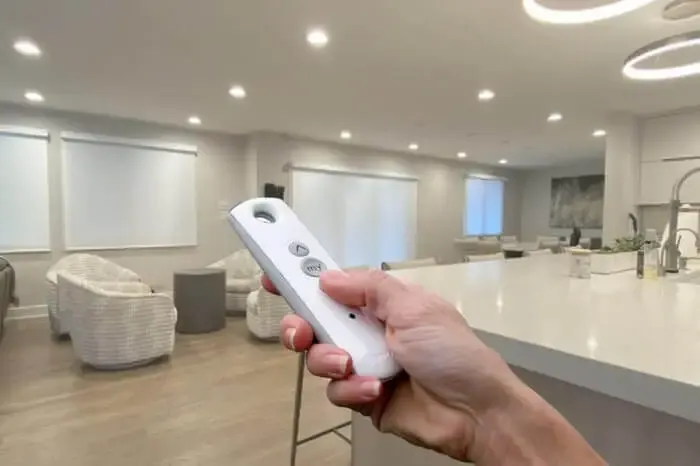
Motorized shades and smart shades get talked about like they're the same thing, and they are not quite. One is a shade with a motor in it. The other adds a layer on top that lets an app or a voice assistant reach that motor. Here is how the pieces actually fit together for a Lebanon home.
How Motorized Shades Actually Work
Before ordering, ask exactly how the motor is powered. Most are either a rechargeable battery pack or hardwired to line voltage, and a few budget kits still use disposable batteries. That answer changes the install entirely, including whether an electrician needs to be involved, and it's not always obvious from a product photo or a showroom display.
Ask what's needed to get app and voice control, specifically, not just "is it smart." Some motors need a proprietary hub sold separately. Others build networking into the motor itself, no separate hub required, though that's still the less common setup as of 2008.
And ask what happens with just the remote, no hub, no app, since that's the fallback you'll be living with the moment your Wi-Fi has a bad day or the hub needs a reset. A Lebanon installer who's actually set up more than a handful of these systems, not just sold them, should be able to answer all of that without checking a spec sheet.
Power Planning and Backup Control
The mistake we see most in existing homes: someone commits to hardwired shades without checking whether power is realistically available near that window, then finds out during the measure that it means opening a wall they didn't plan on opening. Confirming a power path before ordering avoids that entirely.
Another common gap: no backup remote anywhere in the house. Everything runs through the app for months, then the router has an issue and nobody can find a way to move a single shade until it's back online. A basic remote that talks straight to the motor solves this and costs very little to add.
We've also seen scenes built around a hub that then becomes a single point of failure. If the hub goes down, the scene stops working, even though every individual shade in that Lebanon home might still respond fine to its own direct remote.
If you already know you want smart shades in Lebanon but are not sure which ecosystem or power source fits your home, a free in-home measure is a low-pressure way to get specific answers instead of general advice.
Voice Control and the Hub Question
Alexa and Google Home are voice platforms, not the company that made your shades, and the same is true of Apple's Home platform. In almost every case, the shade motor talks to its own manufacturer's hub first, and that hub is what actually connects out to the voice platform through a skill or an integration.
Apple's system, Home, has historically been the strictest about this, generally wanting a hub built specifically for that ecosystem, or a compatible bridge, in the chain before a shade shows up as an accessory. Z-Wave and Zigbee are two other low-power standards some shade brands build into their motors directly, and each needs a hub that speaks that specific protocol.
A newer standard, Matter, is meant to smooth all of this out by letting devices work across ecosystems without as much brand-specific bridging. Some newer hubs support it, but plenty of shades already installed in Lebanon homes predate it and still rely on their original manufacturer hub.
What Actually Fails in a Smart Shade System
A large Lebanon home with shades spread across multiple floors puts more strain on a single hub than a smaller house does. Signal has to travel further and through more walls, so what works fine in a compact ranch can struggle in a home with a finished basement and a bonus room upstairs.
Rooms far from the router, a detached sunroom or a converted garage, are the most likely to have connectivity trouble first. If a project includes rooms like that, it's worth planning for a second hub or a signal extender from the start rather than waiting to see if it becomes a problem.
Kitchens and rooms with a lot of structural steel or ductwork can also interfere with wireless signal in ways that are hard to predict without just testing it once the shades are actually installed.
Battery Life and Charging in the Real World
Battery motors cost less upfront than hardwired ones, based on national pricing patterns, mainly because there's no electrical labor involved. But that battery is a recurring task, not a one-time cost, and it's worth weighing against a hardwired setup if a shade is going to get used many times a day.
Solar-charging panels are a common add-on that can stretch the interval between manual charges significantly. They only work well on a window getting real direct sun, though, so a north-facing Lebanon window or one heavily shaded by trees won't see much benefit from one.
If a shade is going in somewhere hard to reach, a stairwell or a high transom where a ladder is genuinely a hassle, we usually steer people toward hardwired or at least a solar add-on, since climbing up to recharge a battery every few months gets old fast.
Frequently Asked Questions
Can I mix shade brands on one app?
Sometimes, but do not assume it. Different manufacturers often use different hubs and different radio protocols, so a shade from one brand may not show up in another brand's app without an additional bridge, if that is even available. Checking compatibility before adding a second brand to an existing system saves a headache later.
What actually causes a smart shade to stop responding?
More often than not, it is the network, not the shade. A hub that lost its Wi-Fi connection or a battery that quietly ran down are the most common causes we see, along with a router password that changed without the hub being updated. Actual motor failure is much less common and usually only shows up after years of heavy use.
Is Matter going to make all of this simpler?
Eventually, for some systems. Matter is a newer standard meant to let smart devices work across ecosystems without as much brand-specific bridging, and some newer shade hubs are starting to support it. Plenty of shades already installed do not support it yet and still rely on their original manufacturer hub, so it is not a universal fix as of 2008.
 Covering a Sliding Door Without Getting in the Way of the Door
 Window Treatments for Tall and Oversized Windows in Lebanon
 Drapery Fabric Basics: Weight, Light Control, and Fade